Wednesday, 3 May 2023

Raman Raghav


We've all heard about Jack the Ripper! However, India had its own Jack the Ripper, who terrorized the nation in the mid-1960s. Raman Raghav, also known as Anna, Thambi, and Sindhi Talwai, was a notorious serial murderer who terrorized Mumbai's streets in the 1960s. He was popularly known as Psycho Raman. He was infamous for his ruthless methods and was responsible for at least 41 murders. Raghav's acts were so horrific that he earned the title of "Mumbai maniac" from the media.

Raman Raghav 'Psycho Raman'

Raman Raghav was born in a Tamil Nadu village in 1929. His mother abandoned him when he was a young child, and his father was an alcoholic who often abused him. Raghav ran away from his home as a teenager and embarked on a life of petty crime, usually stealing to support himself. He later moved to Mumbai and started doing odd jobs, but his criminal activities continued to prevail.

Raghav's murder spree began in the mid-1960s. He mainly targeted homeless people such as pavement dwellers, slum residents, and drug users, believing they were easy prey. He would kill his victims by crushing them to death with a blunt item, such as a stone or a pipe. Raghav would frequently tear apart and sometimes cannibalize his victims' bodies. He was also believed to be a necrophiliac. His crimes were extremely horrific, shocking the entire city. The residents of Mumbai were in a state of panic. People were afraid of sleeping outside, or with open windows or balconies.

Raghav's news clipping

A similar series of murders had occurred a few years earlier in the Eastern suburbs of Mumbai in 1965-66. In that year,19 persons were attacked, 9 of them died. The police initially had no clues on the killer, but Raghav was captured in 1968 after hitting a man with a stone. The victim survived and was able to describe the attacker, which resulted in Raghav's arrest. Raman Raghav was discovered by the police to be an ordinary-looking man casually walking the streets with an umbrella. Raghav initially refused to answer any of the police questions. However, once the police fulfilled his desire to eat chicken, he revealed his crimes and even guided authorities to some of the murder sites. In his confession, he admitted to murdering 41 individuals in 1966 and nearly a dozen in 1968. He had no remorse for his crimes and even boasted about them.

Raghav was sentenced to death. However, before confirming the sentence, the High Court of India directed the Mumbai Surgeon General to examine whether or not the accused was of sound mind. He was interviewed five times for two hours each. His statements in interviews revealed his insane state. The following were the statements:

  • He feels that individuals attempted to change his gender but were unsuccessful.
  • Belief that others are attempting to put homosexual desires in his way so that he will convert to a woman.
  • That homosexual intercourse would turn him into a woman.
  • He often stated in interviews that he was a "101% man." 
  • He had a general belief that the government brought him to Mumbai to commit crimes.

Raghav was considered to be mentally unstable after being diagnosed with chronic paranoid schizophrenia due to which he was unable to understand that his actions are contrary to the law. As a result, he was spared the death sentence. He was sent to a mental institution under Yerwada Central Jail, Pune, where he remained for the rest of his life. He died of kidney failure in 1995.

'Raman Raghav 2.0' 

The Raman Raghav case has been the topic of various films and documents including the 2016 film "Raman Raghav 2.0" directed by Anurag Kashyap. The criminal is portrayed as a distorted anti-hero in the film, and the film looks at what drives someone to indulge in such horrible acts.

Raman Raghav's acts were terrible and brutal, and he remains a renowned character in Indian criminal history. His story serves as a reminder of the horrors that people who are mentally ill can commit, as well as the importance of recognizing and treating mental illness.

Saturday, 29 April 2023

M.Jaishankar

Have you heard of the phrase "be careful on the highway"? How some stretches of the road appear to go on forever. That was, in fact, the terror that surrounded society during the time of 'Psycho Shankar'.

M. Jaishankar 'Psycho Shankar'

The Indian serial killer and sexual predator known as Psycho Shankar, whose real name is M. Jaishankar, was notorious for committing a number of rapes and murders between 2008 and 2011. He was born in Kanniyanpatti village, Tamil Nadu, in 1977. He was said to be married and have three daughters. He began his profession as a truck driver. His wife, who is now a single mother, told the New Indian Express that Jaishankar ran away from home while their girls were little.

Jaishankar began committing crimes in 2008, but they went unreported for almost a year. His first crime was an attempted rape and murder of a 45-year-old woman in July 2009. He had raped and murdered 12 women by August 2009. He always had a black handbag on him and carried a machete. At first, he would abduct sex workers from highways, rape them, and then violently execute them. But after that, he began picking random women from highways, farmhouses, and rural locations. In police custody, he admitted that he enjoyed torturing women before raping and murdering them.

Jaishankar was arrested for the first time in 2009, when he kidnapped, raped, and murdered a female police constable. He was imprisoned at the Coimbatore Central Prison, from which he escaped in March 2011. He fled to Karnataka, where he killed a man, a kid, and six women in addition to raping and killing them. However, he was caught by locals in May 2011 and handed over to authorities.

Jaishankar's Poster

He was imprisoned at Bangalore's Parappana Agrahara Central Jail following his arrest in 2011. In prison, he received psychiatric treatment. He was sentenced to 27 years in prison; however, he escaped on September 1, 2013. While attempting to jump from 15 and 30-foot walls, he suffered serious injuries. The police issued a red alert to all Karnataka police stations and warned all ladies to be careful in isolated places. He was arrested by police on September 6, 2013, after a police informant informed them about him.

He was then sent to Central Prison in Bangalore to serve his prison sentence, where he was kept under strict custody. Jaishankar made another unsuccessful attempt to break out of the prison on February 25, 2018. As a result of his failed escape attempt, he was placed in a separate jail cell. He is suspected of being associated with approximately 30 rapes, killings, and robberies across Tamil Nadu, Karnataka, and Andhra Pradesh. He had been charged with at least 19 female murders at the time of his death. On February 27, he killed himself by slitting his own throat with a blade he had stolen from the barber. However, according to his wife, Jaishankar had no compelling reason to commit suicide, and his death was the result of foul play. She wants the police to look into the matter.


Jaishankar's wife Parameshwari (Left)

M. Jaishankar's case has been recognized as one of India's most frightening examples of serial murder. The term, "Psycho Shankar" which he went by, has come to represent brutality and needless killing. 

Despite the fact that all victims were killed in a similar manner, Jaishankar went undetected for several months. This emphasized the need for improved policing and law enforcement in India. In addition to serving as a reminder to address women's safety concerns, the M. Jaishankar case also highlights the need to raise awareness of violence against women in India. Only by addressing these issues, we will be able to create a safe and equal society for all.

Tuesday, 25 April 2023

Thug Behram


Have you heard about a serial killer who killed his victims by using only a handkerchief? An Infamous killer whose name was lost in the history of India. 

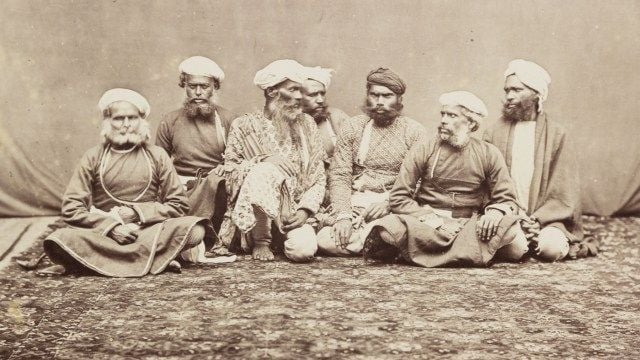
Thug Behram, who also goes by the name Buhram Jamedar or Behram Gur, is one of the most notorious serial killers in history. He belonged to the Thuggee cult, which committed murder for more than 600 years in India. The Thuggee cult was well-known for its ritualistic killings, which involved strangling their victims with a piece of fabric called a rumal. Up to 2 million individuals are thought to have died at the hands of the Thug cult.

Thug Behram

Behram was born in the early 19th century in Ratnagiri, Maharashtra, India. He grew up in a family of thugs and acquired the skill of strangulation from his father at an early age. Behram climbed fast through the ranks of the Thuggee cult, becoming one of its most proficient and notorious members.

Behram's reign of terror began in the early 1800s, and he continued to commit murders for nearly 40 years. He was responsible for at least 931 deaths, making him one of history's deadliest serial killers. According to certain estimates, his actual victim count could be as high as 1,000.

Behram and his cult

Behram's strategy was straightforward but effective. He'd travel with a group of other Thugs, pretending to be traders or pilgrims. They would befriend and earn the trust of travelers before murdering them in a remote place. Behram was well known for his ability to strangle his victims fast and quietly, rendering them unable to fight back.

The Thuggee cult functioned in secret for many years before attracting the attention of British authorities. A British officer named William Henry Sleeman was assigned the responsibility of putting an end to the Thuggee cult in 1830. Sleeman spent years gathering intelligence on the Thugs before capturing Behram in 1840.

Behram was prosecuted and convicted guilty of 931 murders. In 1840, he was sentenced to death and executed. Behram allegedly boasted of killing over 900 people and that he had no regrets before being put to death.

Behram's legacy is a terrible one, and his name has become associated with murder and terror. The Thuggee cult is no longer active, yet its horrible legacy goes on. The story of Thug Behram serves as a reminder of human wickedness and the horrors that might result from obsession and blind obedience.

Thug Behram's Handkerchief

While many specifics about Thug Behram's life and actions are covered up in myth and traditions, there are some lesser-known facts about the man behind the infamous Thuggee cult:

1. His original name is unknown; Thug Behram is thought to be a nickname given to him by his fellow Thuggees. His real name is unknown.

2. Although the Thuggees cult was renowned for its religious diversity. Thug Behram is believed to be a Muslim. According to some sources, he was a devotee of Sufi saint Shah Abdul Qadir Gilani.

3. Despite his reputation as a ruthless killer. Thug Behram was known for treating his victims with kindness. Some tales claim that before strangling his victims, he would provide them with food and drink.

4. Thug Behram was well-known for his ability to speak various languages effortlessly.

5. The execution of Thug Behram was a public spectacle, with thousands of people gathering to watch him hang. His body was subsequently displayed as an example to other would-be criminals.


Mohan Kumar

  Certain crimes gain a lot of public attention because of their brutality. One such case which captured a lot of the public was Cyanide Moh...